

Lead replacement programme
Our goal is to provide you with clean, safe drinking water. We’re doing this by investigating the presence of lead water pipes and, where we can, replacing them free of charge.
We’ve got a dedicated team supporting our customers to identify the presence of lead pipes and in most cases, renewing these pipes with safer, more sustainable plastic pipes. We aim support our customers through our shared journey of reaching a lead pipe free Wales.
What does this mean to you?
If we think you may have lead pipe work supplying drinking water to your property, we would like to support you locating these pipes and where we can, replacing any lead pipes that you own as well as Welsh Water owned pipes.
How will you know if you have lead pipes?
If your property was built before 1970, there is a chance that you may have lead supply pipes. If you are unsure, you can carry out some of the following checks, or you can contact us to arrange to have your water tested.
- What does your pipe look like? Find where the water pipe runs into your property, unpainted lead pipes are dull grey and soft.
- Scratch test – Scrape with a knife to see if a shiny silver, coloured metal beneath
- Check joints – Lead pipes have swollen joints
- Arrange for a water sample test – Contact Us
What happens if you have lead supply pipes?
Long term exposure to lead can have adverse effects when consumed, which can be potentially damaging to health, but there is no need to worry. There are strict regulations governing the maximum amount of lead allowed in drinking water, and the existing limit for lead in drinking water in the UK is 10 microgrammes per litre. For further information, please visit Wales Public Health Partnership.
Process
The diagram below shows the different types of pipework in the ground that are laid to supply a property with drinking water, detailing the ownership and responsibility of these types of pipes.
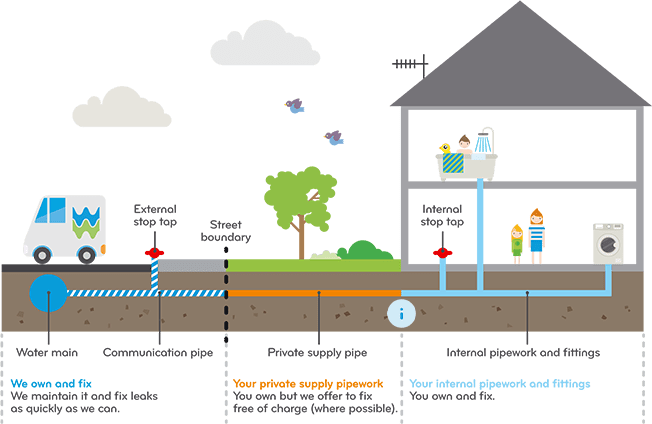
We’ve outlined what a normal process could look like when replacing these pipes. This is for guidance only and could change depending on individual property circumstances.
Lead replacement pipe journey
Following initial investigations, we decide to proceed with replacing pipes based on the evidence gathered (water quality sample, customer testing etc.)
We’ll send one of our expert surveyors out to assess what work is likely to be required. We’ll discuss this with you when we visit and f you agree, we’ll ask you to sign a consent form for us to progress the work (we’ll only ask you to do this if we’re working on pipes owned by you).
We’ll send our team to replace any pipes discussed and agreed with you during our investigation stage.
Following the pipe replacement, we’ll revisit and backfill and reinstate the ground ensuring the pipe is buried and any mess is cleared.
What to expect from us
We’ll aim to do as much of the work as possible but there will be occasions when we’re unable to complete work on pipes that aren’t owned by us. This could be due to reasons such as ground material, engineering difficulties etc.
The picture provided shows typical examples of what we can do but if your reinstatement requirements sit outside our parameters of work, our surveyor will discuss this with you before any work is agreed.
Get in touch with us
If you’re interested in more information, here’s how you can apply. Once we’ve received, a member of the team will respond to you within xx days.
Frequently asked questions
Free of charge.
Unfortunately, we don’t offer a payment scheme or methods of supporting financially. If you require assistance regarding tariff and billing payments, please contact the Vulnerability team.
Our Water Regulations team has a list of accredited plumbers with WaterSafe. For further information, visit our Water Regulations website.
Unfortunately, we don’t offer a payment scheme or methods of supporting financially. If you require assistance regarding tariff and billing payments, please contact the Vulnerability team.
Link to the flushing technique with specific guidance and wording from DCWW Public Health and Research team.
